


qualified leads

Qualified Leads: Comprehensive Guide to AI-Powered Lead Generation and Sales Automation
In competitive B2B sales, a precise definition of a “qualified lead“ is essential. Qualified leads meet explicit criteria that signal an elevated probability of purchase. This guide summarises core qualification elements and shows how AI-driven lead scoring and sales automation help sales teams prioritise outreach, reduce wasted effort, and convert more consistently. It covers qualification criteria, AI techniques for scoring, automation benefits, and the role of B2B data providers in improving lead fidelity.
Key Takeaways
- Qualified leads are vetted prospects with a higher chance of conversion.
- AI improves qualification by identifying predictive data patterns.
- Sales automation reduces repetitive work and focuses teams on high-value tasks.
- AI lead scoring integrates with CRMs to rank prospects objectively.
- Automated prospecting speeds pipeline progression.
- Data enrichment adds missing contacts and firmographics to improve outreach.
- Industry-specific approaches (for example, cybersecurity) sharpen targeting.
What Defines a Qualified Lead in B2B Sales?
A qualified B2B lead satisfies criteria that indicate readiness to buy. Qualification lets organisations allocate sales effort efficiently. Typical criteria include firmographic attributes, engagement history, and signals of purchase intent; together these support prioritised, personalised outreach.
Key Criteria for Lead Qualification and Scoring
The primary criteria used to qualify and score leads are:
- Demographic Factors: Industry, company size, and job title to confirm market fit.
- Engagement History: Interactions such as site visits, email activity, and social engagement that show interest.
- Purchase Intent: Behavioural signals and expressed needs that suggest an intent to buy.
Focusing on these areas helps sales teams prioritise prospects with the strongest conversion likelihood and improves resource allocation.
How AI Enhances Lead Qualification Accuracy
AI improves accuracy by analysing large, heterogeneous datasets to uncover predictive patterns. Machine learning models combine historical interactions, demographic data, and behavioural signals to produce probabilistic scores that rank leads by conversion likelihood. This reduces time spent on low-value prospects and directs attention to the most promising opportunities.
Research supports that advanced algorithms can materially refine lead scoring and increase sales efficiency.
AI for Lead Scoring: Enhancing Sales Efficiency & Qualification
This research paper examines the application of artificial intelligence—specifically Random Forest and Logistic Regression algorithms—to improve sales efficiency through refined lead scoring and qualification. Traditional sales processes frequently lack the precision required to maximise conversion rates, causing inefficiencies and resource misallocation. By integrating machine learning methods, organisations can better prioritise leads, optimise sales strategies, and increase revenue.
Enhancing sales efficiency with AI: implementing random forest and logistic regression algorithms for lead scoring and qualification, A Sharma, 2022
How Does AI Lead Scoring Improve Lead Generation?
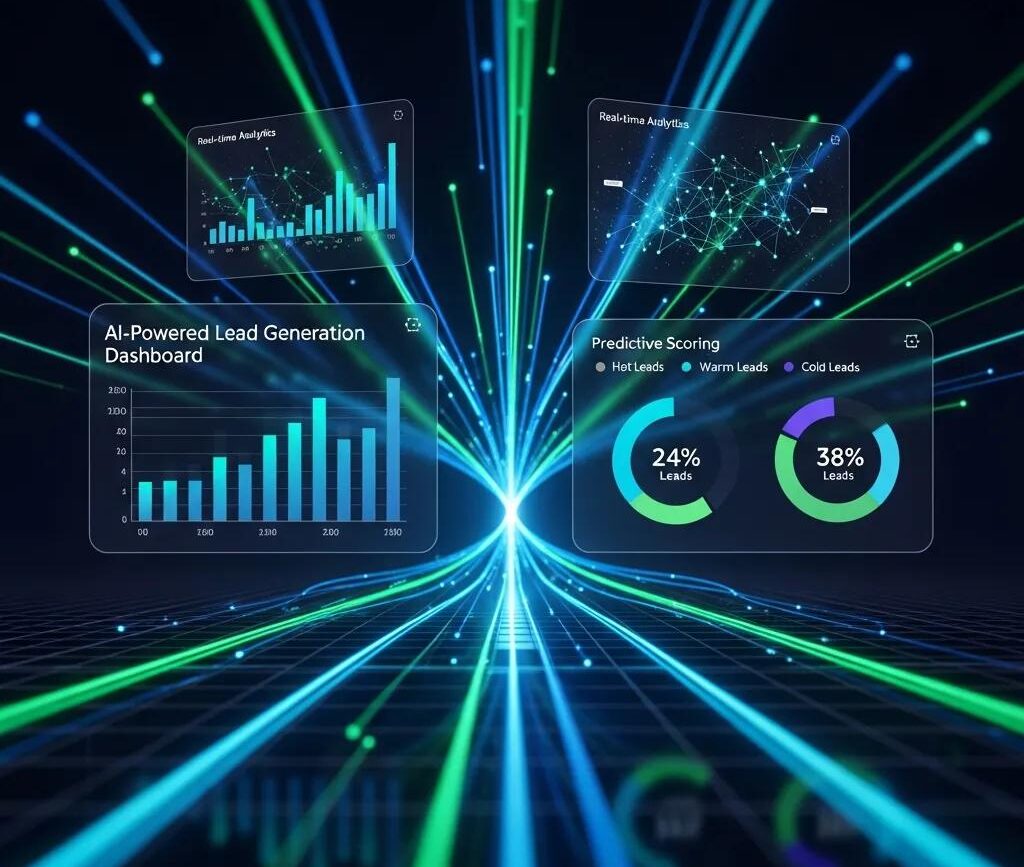
AI lead scoring standardises assessment of prospect quality and flags high-potential accounts. By ranking leads objectively, AI elevates the overall quality of the pipeline and guides sellers to the best opportunities.
Techniques and Algorithms Behind AI Lead Scoring
Common techniques include:
- Data analysis of historical outcomes to identify conversion signals.
- CRM integration so scores update within existing workflows.
- Continuous evaluation to refresh scores as new interactions occur.
These methods give sales teams consistent prioritisation criteria and support data-driven decision making.
Integrating AI Lead Scoring with Sales Automation Workflows
When paired with sales automation, AI scoring triggers efficient workflows: low-value leads are deprioritised, high-value leads receive tailored outreach, and routine administrative tasks are automated. Dynamic scores ensure engagement strategies stay aligned with evolving lead behaviour.
AI can also automate initial qualification and customer profiling, standardising early sales stages and accelerating the sales lifecycle.
AI Automation for B2B Lead Qualification & Sales Process
This source addresses the automation of fundamental tasks including lead qualification, customer profiling, and data analysis. After lead identification, such systems undertake a substantial portion of the evaluation and routine processing.
How AI Can Automate the Sales Process for Lower-Level Managers in the B2B Landscape, 2025
What Are the Benefits of Sales Automation for Qualified Leads?

Sales automation increases throughput, maintains nurture cadence, and improves conversion performance by handling repetitive processes and freeing sellers for high-value activities.
Accelerating Sales Pipelines through Automated Prospecting
Automated prospecting increases pipeline velocity by enabling parallel outreach and ensuring timely contact. Platforms can prioritise engagement based on observed behaviour and stated interests to keep prospects moving forward.
Enhancing Lead Nurturing and Conversion Rates
Automation supports structured, personalised nurture sequences. AI-driven insights inform timing and messaging, while automated follow-ups (emails, reminders) sustain engagement across the buyer journey and improve conversion rates.
For organisations seeking to optimise lead generation, Paywolf offers AI-enabled lead generation and sales automation that automates identification, scoring, and nurturing to accelerate pipeline movement.
How Do B2B Data Providers Support Qualified Lead Generation?
B2B data providers supply enrichment and AI-ready datasets that increase the accuracy of lead profiles. Better profiles help sales teams focus on prospects that match the ideal customer profile.
Role of Data Enrichment in Improving Lead Quality
Data enrichment appends missing contacts, firmographic details, and behavioural signals. Enriched profiles give a fuller view of prospects and enable targeted, evidence-based outreach that raises engagement rates.
Industry-Specific Lead Generation: Focus on Cybersecurity Professionals
Industry-focused generation—such as for cybersecurity—requires precise targeting and sector-aware content. Knowing the audience’s priorities enables relevant materials and partnerships that open access to appropriate prospects.
Frequently Asked Questions
What are the common challenges in lead qualification?
Typical challenges are misalignment between marketing and sales on criteria, stale or incomplete data, and difficulty prioritising large lead volumes. Clear qualification rules and integrated data systems help address these problems.
How can businesses measure the effectiveness of their lead generation strategies?
Measure using KPIs such as conversion rates, lead quality scores, cost per lead, lead-to-customer ratio, and time-to-conversion. Customer feedback and engagement metrics add qualitative insight; regular reviews enable optimisation.
What role does content marketing play in lead generation?
Content attracts and engages prospects by answering pain points and demonstrating expertise. Assets like whitepapers, webinars, and research articles build authority, capture leads, and nurture them through the funnel.
How can AI improve the lead nurturing process?
AI personalises interactions using behavioural and engagement data, recommends timing and messages, and drives automated workflows to ensure consistent, timely follow-up without extra administrative burden.
What are the best practices for integrating AI into lead generation efforts?
Define objectives and success metrics, ensure clean enriched datasets, choose AI tools that fit organisational needs, and monitor and iterate models while training staff to use outputs effectively.
How can businesses ensure compliance with data privacy regulations in lead generation?
Comply by following laws such as GDPR and CCPA: use transparent collection practices, obtain consent where required, maintain clear privacy notices, run audits, provide staff training, and secure data handling procedures.
Conclusion
AI-powered lead generation and sales automation help organisations concentrate effort on high-potential prospects and make qualification more predictable. A disciplined qualification framework, paired with appropriate technology and clean data, improves outreach effectiveness and conversion outcomes. Organisations that apply these practices can expect steadier pipeline performance and more efficient use of sales capacity.

Elad Rabi
Paywolf is a B2B lead generation company that builds data-driven sales pipelines and custom AI-powered outbound systems to generate qualified meetings and predictable revenue at scale.